

After The Role: Wu's On First
"Huh?" Episodes.

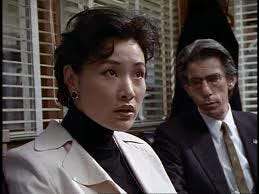
Sometimes - you just gotta have fun.
Inconsistent, illogical, unhinged fun.
Welcome to Wu’s On First. The title was a takeoff on that famous Abbott and Costello bit about a fictional baseball team. It’s an episode full of baseball references and aims towards a 1940s madcap, comedy vibe.
After watching it for the first time in 28 years? Yeah, I have thoughts…
Written by David Simon & Anya Epstein from a story by James Yoshimura & Julie Martin and directed by Tim McCann.
It's not your basic Homicide episode (is there a basic?). But, maybe that’s the point. Tom and company never let a little thing like cop genre get in the way of telling a good story. Or, as the Baltimore Sun editor says, “Sometimes you just gotta shape the facts to fit the story.”
Factoid #1: From Deep Throat informant Tom Fontana (oops!) - this was not, as some surmised, a shot at a backdoor pilot. Kellerman P.I. was the only spin-off Tom ever pitched.
No, this was an episode full of people putting all their eggs into one basket, and said eggs getting broken. An episode built on velocity and chutzpah, with heaps of improv between good friends.
The moment we see the lovely Joan Chen as a driven, Pembleton-esque type reporter, and a couple of rowdies lounging around in the squad room - we are already in weird territory.
David Simon used Howard Hawks His Girl Friday as a guiding light. He wanted that sense of quick banter in the newsroom. But as good an actress as Joan Chen is, she was cast without a read, and quick repartee, at that time, wasn’t her forte. By the time that was evident in the first rehearsal, it was too late for a rewrite. That’s being a TV staff writer (and story editor) for you. Only so much control.
On the other hand, with Eric Stoltz and Tate Donovan as the marvelously rowdy Kellerman bro’s hunting down Mikey, you had three actors who thrived on banter, anarchy and improv. Also, they were good friends, all having been in the WWII flick, Memphis Belle.
Factoid #2: While prepping for Memphis Belle, they shared a one-man pup tent to get in the feels of their characters. In Baltimore, the friends bunked together at Reed’s house rather than staying at a hotel.
According to Reed, once they hit the Homicide set, no one could stop them. It was the first time that full-out improvisation was allowed, and they were ‘uncontrollable’. The scenes on the boat were complete madness, devolving into chaos, which left at least one crew member, who tried to maintain some semblance of control, in tears.
I didn’t have a lot to do as Tim. But, watching after all this time, a couple of things stood out: It was my first year of sobriety. I had also just directed my first episode, Diener, and for the most part, I was happy, healthy, and feeling like I being of service to others.
Also, I found myself unhappy with Tim in one scene. Yes, the reporter crossed a line—one with consequences. But Tim gets in her face, calls her a vulture - a vulture! - and joins the fray. In 1998, that may have felt like squad-room heat. But watching in 2026, it reads more like a pile-on.
Back then, you could write an Asian woman reporter and bend her name into Abbott and Costello wordplay. Would that fly now?
Maybe. Maybe not. But that’s almost beside the point.
I don’t remember questioning it then. We were moving fast — the episode, the set, my life. Speed can be exhilarating. It can also be a kind of cover. Years later, when a replay freezes a moment in time, it freezes the version of you who didn’t pause.
Watching it now, I don’t feel regret. I feel awareness. Of who I was. Of who I was becoming. Of how easy it is to let momentum make choices for you.
Performances remain. What shifts is perspective.
And sometimes, that’s the real rewatch.
Curious how it lands with you.
The episode is fairly fresh in my mind because my wife and I watched the entirety of the series from December into January.
It actually sticks out more in her mind as a "Huh" episode because of the plot with Kellerman's brothers. She didn't like the element that they brought to the show and felt that they belonged to a different program, and somehow popped up here.
I get what she's saying, and it actually kind of makes some funny sense based on what you said about the actors themselves and the kind of controlled chaos they brought to their scenes.
Personally, I enjoyed that it gave Gee A chance to flex some muscle again. Oftentimes it felt like he could be too much in the background, and while supportive of his team, didn't always get a chance to show that. For that reason, I appreciate what it was doing.
I'm not sure how I feel about the overall storyline which frames the police against the press. This isn't the first show to do it, wasn't the last, and certainly wasn't the most egregious offender of falling into this cliche. The press is often painted out to be an enemy of the police when in actuality, the press should serve as a check and balance against other powers, whether it be the police or the government, corporations, etc.
I don't think HLOTS did this too often, Tony Todd in an earlier season of course, But this episode also tries to subvert that by ultimately having Gee manipulate events to his advantage. Overall, certainly not an unenjoyable episode but a lot of moving parts with some new gears placed in there In the form of new characters. Maybe a bit too much?
I just rewatched this episode yesterday. I liked it the first time and I still like it.
Here's what I liked:
1) the strong female character played by Joan Chen. She was self-assured, perhaps even smug, when interacting with the police. Gee called her a "player". He liked her....a lot!
2) the storyline of the delicate balance between the press and the police investigation. It's complicated and it showed the strong feelings on each side of the situation. Bayliss's "vulture" comment to Joan may have been stern, but he summed up the feelings of the other detectives, in my mind. She had definitely been taken down a notch in her self-assuredness and learned an important lesson as a journalist, and as a human being.
3) the Kellerman brothers. Definitely bad boys and scoundrels! but hilarious? you betcha! I liked knowing about the improv going on in the scenes, as I wondered that as I watched them. And the family story gave great insight into Kellerman's personality.
4) the baseball references, and just the overall fun humor.
"Have you seen Wu?"
"Who?"
"Wu"
"Wu?"
"Whoa!"
5) the last scene between Gee and Wu at the bar. Adorable. How could she resist Gee's smile???