After The Role: Rocket Scientists Do Chekhov Part 1

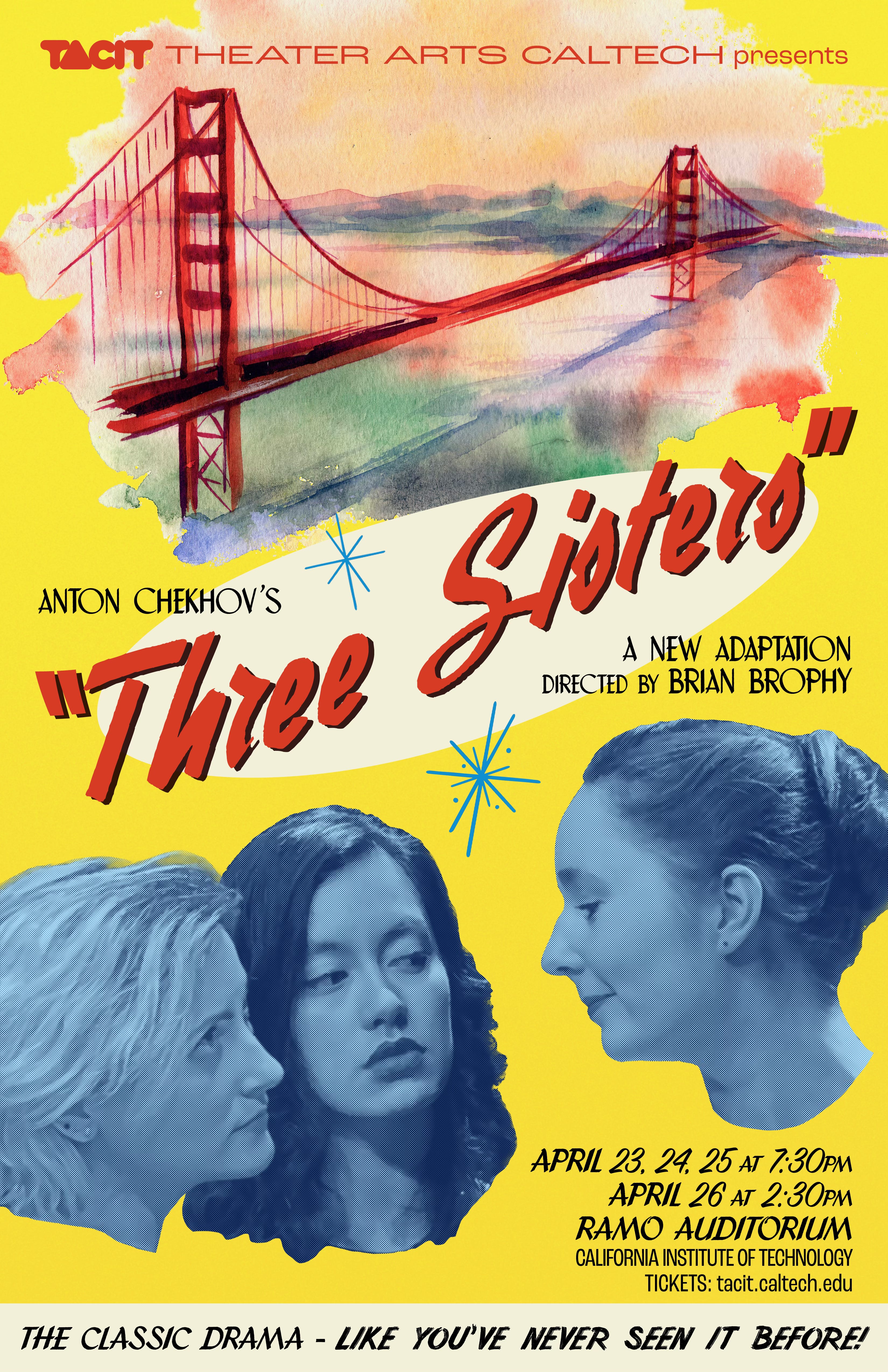
Three Sisters by Anton Chekhov is already a play about people trapped between intellect and longing. About ambitious people stranded in lives that no longer feel large enough for them.
So perhaps it makes sense that this cool, Rat Pack-inflected adaptation emerged from the imagination of Caltech and Jet Propulsion Laboratory (JPL) — institutions built around solving the unknowable.
Except Chekhov is notorious for refusing solutions.
In this version, turn-of-the-century Russia becomes California in the early 1950s. The Korean War is winding down. America’s involvement with Vietnam is just beginning. Military towns are appearing across the eastern stretches of California, filled with new immigrants, enlisted soldiers, and families trying to build meaning inside temporary lives.
This is where Chekhov’s sisters are stranded.
And instead of dreaming of Moscow, they dream of San Francisco.
IRINA: “I’ve been waiting. We were going to move to San Francisco and there I would meet my true love, I dreamed of him, I loved him… But all that’s turned out to be nonsense, all nonsense…”
To San Francisco.
To San Francisco.
To San Francisco.
In this Chekhov, San Francisco is less a city than a condition of hope.
And what fascinated me wasn’t simply the relocation of the play, but who was performing it.
At CalTech, they study propulsion systems, quantum structures, biological engineering, and deep space. It’s a funnel into JPL — a world of physicists, engineers, biologists, and theoretical thinkers whose daily lives revolve around precision, systems, and measurable outcomes.
Then, in their scant spare time, they rehearse Chekhov.
This is not a traditional theatre department stocked with aspiring actors and playwrights. TACIT, CalTech’s long-running theatre organization, has existed in one form or another since 1897, carrying with it a kind of campus mythology where science and performance collide.
Perhaps its most famous participant was Richard Feynman — theoretical physicist, CalTech professor, bongo player, professional disruptor and intellectual rebel — who seemed to embody the idea that curiosity itself could become performance.
The current director of TACIT and Three Sisters is Brian Brophy. A brilliant guy, whose own theatrical sensibility appears shaped as much by the minds around him as by his own eclectic artistic path. Over three months, Brophy and the cast adapted Chekhov’s world into Cold War California, exploring not only the mechanics of the play, but the emotional architecture beneath it.
That process intrigued me.
How do people trained to interrogate the universe approach emotional ambiguity?
How do minds built for answers wrestle with a playwright obsessed with uncertainty?
What happens when scientists — people accustomed to the rigorous pursuit of elegant solutions — encounter Chekhov, where longing remains unresolved and meaning continually slips through your fingers?
The more I spoke with Brian, the less random this meeting of forces felt.
Not scientists “trying out theatre.”
But human beings, regardless of discipline, trying to understand themselves with the same ancient questions:
How do we live?
How do we matter?
And why does the future always seem to exist somewhere else?
But of course, the deeper story wasn’t that CalTech scientists were performing Chekhov. It was how they approached him while involved in various projects tied to the Artemis missions and deep-space exploration.
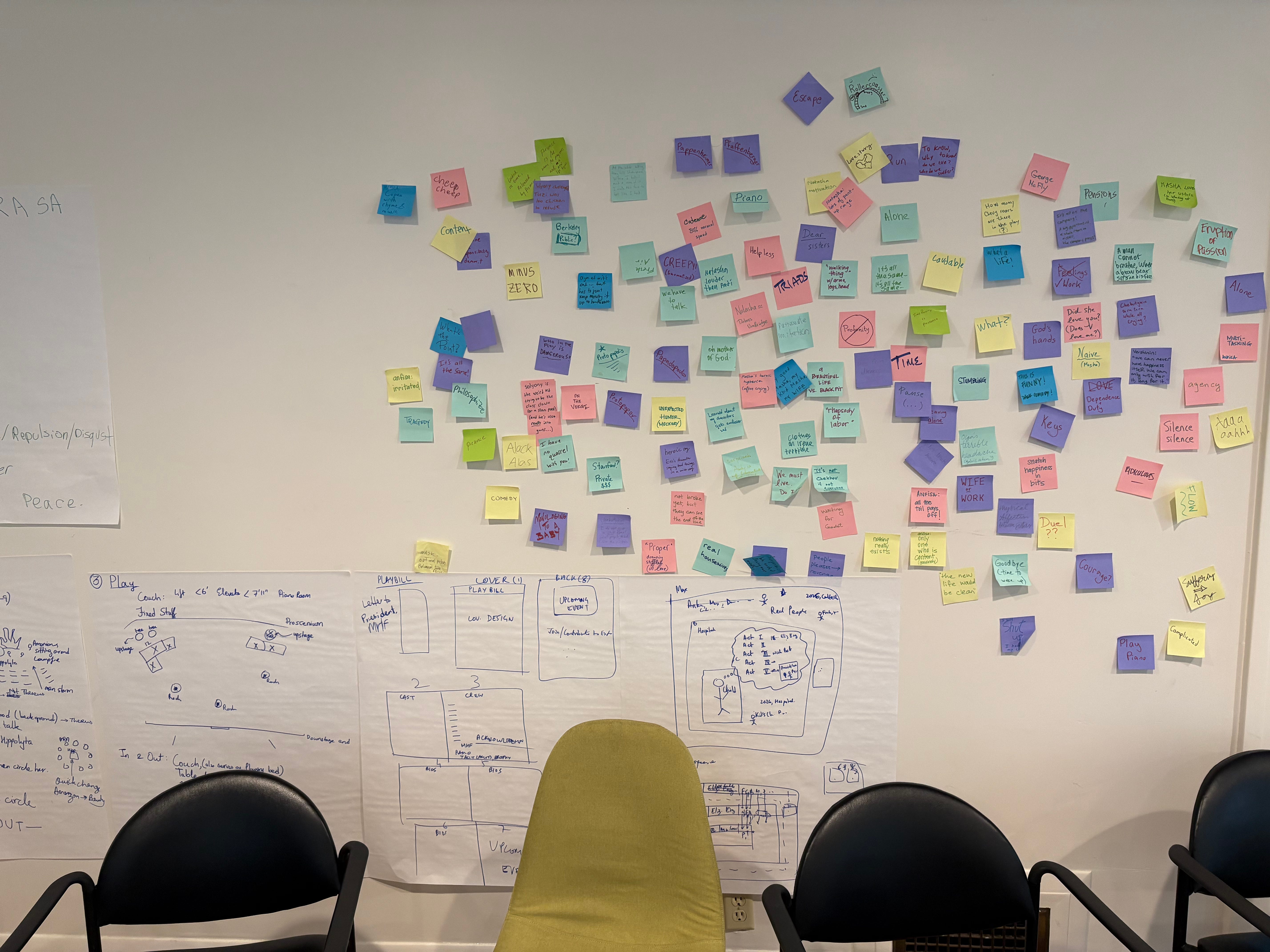
I got a hint of this confluence of objectives by walking into the rehearsal room itself a week or two after the final performance. The walls were still adorned with diagrams, systems, sticky notes, and emotional architecture — as though there was still something to be worked out.
It suggested a fascinating overlap between scientific inquiry and theatrical process that I still haven’t fully sorted out…
More on that in Part Two — including the director’s insights and a closer look at the rehearsal room itself, whose “process walls” still seem to hum with unfinished thought.